
Stormwater Management
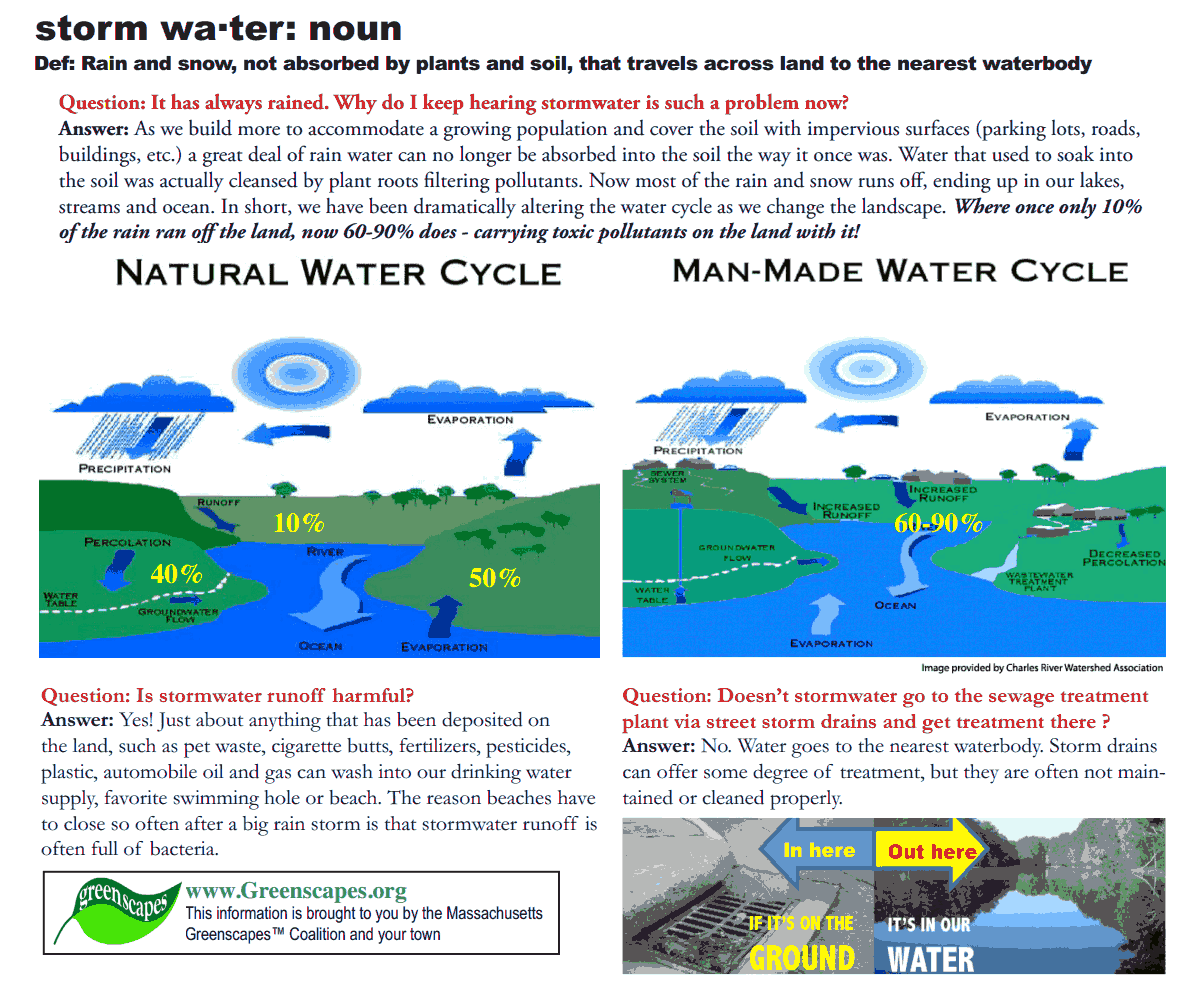
The rivers and streams in Hanover are nature's natural drainage system. All precipitation falling from the sky is either absorbed into the ground or runs into a river or stream, eventually ending up in the Drinkwater River, Indian Head River, Third Herring Brook, North River, and ultimately flowing out to sea. Man-made development impacts these rivers and streams, causing stormwater to flow more rapidly into the rivers and streams than nature intended. This rapid flow picks up contaminants that impact the natural ecosystems as well as the Town's drinking water. We rely upon nature for our very survival. In order to preserve the delicate balance of these fragile ecosystems, we all need to do our part to minimize man's impact on the natural order.
Responsibility
As an operator of a municipally separate storm sewer system (MS4), the Town of Hanover has both a moral and a legal obligation under the Federal Clean Water Act to control the quantity of pollutants and quality of stormwater being discharged into the rivers and streams from our catch basins. The drainage systems in neighborhoods are designed to treat the stormwater as best they can before discharging the water to the streams. In the neighborhoods built since the 1980s, there are often large man-made retention ponds that are designed to both control the rate of flow of the discharge as well as separate out solids that may have been washed into the drainage system. This is just one way that we are doing our part to minimize man's impact on the environment as a result of development. In fact, we have a comprehensive stormwater management program with many best management practices (BMP's), all of which are designed to incrementally improve the rivers and streams. One component of our plan is to partner with the local watershed association, the North and South Rivers Watershed Association (NSRWA), to help advance the goal of cleaner rivers and streams.
Adopt a Storm Drain Near You
 Fall leaves raked or blown into the street can get into storm drains and cause flooding, and affect water quality. Deteriorating leaves add phosphorus to our water bodies, which can pollute our local waters. A good alternative is to rake your leaves into gardens, flower beds, and out-of-the-way areas so that small animals, bees, and butterflies can use them to overwinter. Then, in late spring, you can compost them or use them for natural fertilizer or mulch. Please adopt a storm drain near you and help keep it clear of debris. For more tips on how to keep storm drains clean, visit NSRWA.org/Get-Watersmart/Stormwater.
How can you help?
While the Town has a specific ongoing program for stormwater management, we encourage everyone living, working, or traveling through Hanover to do their part to minimize their personal impact on the environment. It isn't hard. Collectively, small changes in our daily habits and lifestyles will have a significant positive impact on the environment. Only by working together will we sustain a healthy environment for generations to come. It is important both for our survival and for improving our overall quality of life.